Stuff it

You have cute, serving-sized winter squash. What do you do? Stuff it.

You want to turn a mound of mashed tofu into something Thanksgiving-esque. What do you do? Stuff it.

A table full of baked squash, tofu un-turkey, mashed red skin potatoes, green beans with garlic butter and toasted walnuts, cranberry sauce, and homemade blueberry crepes sits in front of your face. What do you do?

Stuff it!

Between the spicy polenta-stuffed squash, the stuffing-stuffed tofu, and the stuffed bellies around the table, that was certainly the theme of my Thanksgiving.

It seemed only fitting to create a post stuffed full of photos. Here goes.

THE STUFFED TOFU

THE THANKSGIVING TABLE

The mashed potatoes, stuffing, mushroom gravy, and string beans seem to be stuffed into the back corner, but you get a good view of the polenta-stuffed squashies.

The squashies baring their tangy inner souls

You’ve probably had your fill of photos now.

Ready for a new recipe? How about this:

Picante polenta-stuffed squash
Makes 6-12 servings

Ingredients

3 medium to large winter squash (like butternut) or 6 small ones (like sweet dumpling or acorn)
1 cup cornmeal
4 cups water
Dash of salt
¼ cup olive oil
1 medium onion, diced
3 cloves garlic, minced
2 jalapeños (or hotter pepper like serranos, for more bite), finely diced
About 1 cup cheddar and jack cheese, shredded (optional)

What to do

Preheat oven to 375 F. Pierce the whole squashes with a fork several times. If you have a cleaver or you’re feeling macho, hack open each squash (preferably cutting it right down the middle into 2 identical pieces) and remove the seeds. Place whole squash right side up or squash halves cut side down on an oiled baking tray. Bake for 30-60 minutes or until a fork goes in with a little resistance.

While the squash is cooking, you can prepare the polenta. Heat the olive oil in a skillet and sauté the onion for a few minutes, then add the garlic and jalapeño and sauté a few minutes more. Set the veggie aside.

In a heavy-bottomed saucepan, heat the 4 cups water to a simmer and slowly add the cornmeal, stirring constantly. Add a dash of salt. Lower heat and continue at a leisurely simmer for about 30 minutes, stirring occasionally. When the polenta is thick and smooth, remove from heat and stir in the veggies. Taste and add salt to taste.

Now go back to the squash. If you’re using acorn squash or another smallish, round squash and you’ve baked them whole, at this point you can cut off the tops. They will look like they’re about to become mini jack-o-lanterns. Set the tops aside and do not re-bake them. They’re just for show. If you’re using larger squash, cut them in half.

With whatever kind of squash you’re using, at this point you’ll need to remove the seeds. Also scoop out some of the insides until you have a generous amount of stuffing space.

Stuff each squash up to the top or a little more. Return to the oven to bake at 375 for another 30 minutes or until the squash is good and soft. If using cheese, sprinkle it on top of the squash at this point and bake or broil until the cheese is melted and bubbly.

Serve with the tops on or near the squashies, or cut squash into wedges. Try it with salsa!
Down to the wire

Did you do it? Did you already figure out your Thanksgiving menu? Meal details were the first thing I thought of, but I realize not everyone is as food-focused as I.

 If you still need good vegetarian dish ideas, check it out:

Un-Turkey and Stuffing – My own adaptation of a recipe I found years ago and have been making ever since. Far better than that Tofurky crap.

Pumpkin Cookies – Cookies that I started making this year that have been a hit (try replacing some or all of the raisins with currents or dried cranberries.  You can also substitute butternut or acorn squash for the pumpkin).

More recipes – From another blogger who has collected all the great vegetarian Thanksgiving recipes I was too lazy to search for.

Gobble gobble!

Chocolaty treat

Here’s a recipe from Aiko, who mentioned this simple vegan delight when we had a little reunion in the New Paltz area. We really must have weddings back home more often!

Tofu Chocolate Pudding

Ingredients

-1 cup semi-sweet chocolate chips or a bar of dark chocolate

-1 package soft tofu

-Maple syrup or whatever kind of sweetener you go for

(I don’t have exact measurements because I don’t think you really need them. It’s the perfect recipe)

Method

-Blend the tofu in a blender or food processor until creamy

-Melt the chocolate. This is usually done by placing a bowl over a pot of boiling water and keeping an eye on it so that the chocolate doesn’t scorch

-Mix the chocolate with the tofu in the blender

-Add sweetener until you’ve reached your desired sweetness level

Presentation

Like any pudding, it’s best to pour into individual serving dishes and then cool in the refrigerator.

Alternatively, you can freeze it. I did this in an ice cube tray where the ice cubes were shaped like a heart. Once frozen they were easy to remove only becuase the ice tray was rubber and I could pop them out. With plastic ice cube trays you may need to oil the surface so they pop out (I don’t know what that will do to the taste) or maybe lay some wax paper inside before pouring. Anyway, frozen they are no different from fudgesicles. Delicious!!

Halloween fare

If you’re like me, you think as much about what food to bring to the Halloween party as what to wear. Because of this presumed obsession with food, you have probably realized that Halloween fare can be so much more than brown and orange M&Ms. It can be sophisticated, scary, or delightfully gross. And, I shall argue, it doesn’t have to be loaded with sugar and artificial colors. Take that, Mars!

First of all, you should definitely check out this wealth of fun ideas. (One day I really want to try those eyeballs).

Here are a few slightly simpler ideas.

Polenta Fingers with Monstrous Marinara — Slice polenta to resemble disembodied fingers, fry, and serve with “bloody” marinara sauce. (Adding beet juice, or water that beets were simmered in, can achieve a more authentic blood hue)

Frightfully Good Cheesies – Start by making some wasabi mayo: thoroughly combine about 1/4 cup mayonnaise, 1/4 cup softened cream cheese, a few teaspoons wasabi powder, and salt to taste. Quarter the slices of one loaf of dark pumpernickel bread and slice 12 oz. orange cheddar cheese (don’t worry – it’s usually colored with totally natural annatto). Assemble by slathering a little mayo on each slice and topping with cheese.

Brains on Toast – Combine 8 oz. softened cream cheese, 1-2 Tbs. miso paste, 1-2 Tbs. finely chopped onion, and 2 tsp. vegetarian Worcestershire sauce. Spread on melba toast or toasted baguette. Top with strips of roasted red pepper “entrails” if desired.

Chocolate Graveyards– Get yourself some chocolate cake batter, frosting, and chocolate cookies (organic and/or local, of course) and bake up a cake or a bunch of cupcakes. Frost the top(s) and cover with crumbled cookies (“dirt”) to create a graveyard. Position candy tombstones, gummy worms, green apple cut to look like tufts of grass, etc. along the top.

… and if you’ve ever channeled the ghosts of MIT grads past, you might have success with a Robot Hand. (It really moves! Eat it before it eats you!)

Or try any of these healthy, yummy ideas. What cute jack-Os!

Have fun!

What to do with radishes?

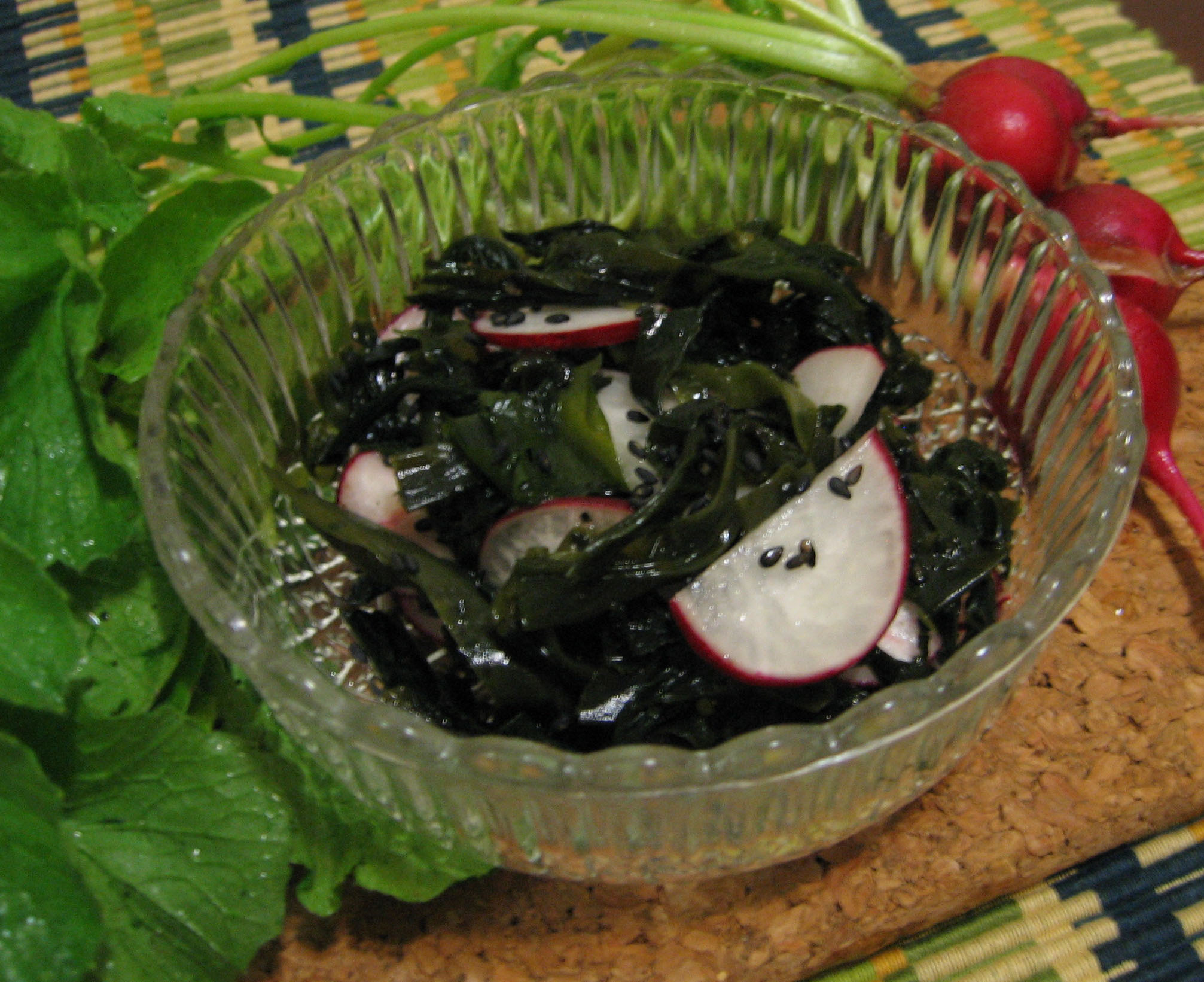
radish-and-seaweed-salad.jpg

They show up in the salads of every diner you visit and are a mainstay of produce aisles, but radishes are not the kind of thing you go crazy over. I’ve never heard of any cookbooks dedicated to them or festivals celebrating them. They are more of an afterthought. But there they were in my CSA share, coming at a rate of six to eight a week, so I decided to make an effort to use them.

The other night, I happened to have a homemade seaweed salad hanging out in my fridge (not common for the average person, I know, but this is me we’re talking about) and a bell went off.

I realized that the soft texture of the ‘weed and the crunch of the radishes would go together beautifully, with the shallow spice of the radish complimenting the deep, subtly salty flavor of its companion. Not only that, but the dark green of the seaweed with the vibrant pink and bright white of the radishes would also look mighty fine together.

So I devised and test drove a recipe that I think came out quite well. I wrote it out here with instructions for making it all from scratch. I’m taking the liberty of assuming you won’t have reconstituted seaweed sitting around.

Radish and seaweed salad
Serves about 4

Ingredients:
1 handful dried wakame seaweed, or other stringy seaweed
1 small bunch radishes, sliced in half moons
3 Tbs. umeboshi plum vinegar, or other vinegar with a sprinkling of sugar and salt
2 tsp. toasted sesame oil
1-2 tsp. sesame seeds
Soy sauce (optional)

What to do:
Soak the seaweed in cold water for 10 minutes or until soft. Meanwhile, slice the radishes and let them soak in the vinegar.

Drain the seaweed and chop into bite-sized pieces. Remove the radish slices from their vinegar bath, reserving the vinegar. Combine and toss with sesame oil and sesame seeds. Add some vinegar or soy sauce if desired.

Eat!

Roasty toasty

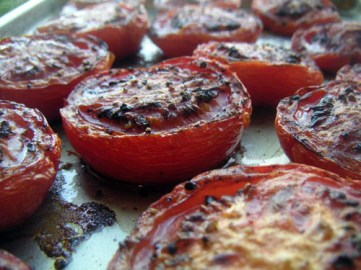
roasted tomatoesYou know that phenomenon of seeing something for the first time and then suddenly seeing it everywhere? This year, that happened to me with one particular recipe. It first popped up around July and since then, I’ve read variations in food magazines, books, an online newsletter, and an email listserv. I began to wonder how it was possible that I’d never encountered it before this summer. Although the recipe has variations, the method is usually simple and always brilliant.

And what is it? It’s the recipe for roasted tomatoes.

Needless to say, I eventually had to try it. Usually billed as a way to save that special fruit for a time when the word “heirloom” again conjures silver broaches rather than buckets of buxom multi-colored produce, this recipe also produces a very tasty addition to just about any dish. Roasting tomatoes does dramatically reduce their volume and allows you to freeze them for months, but it also concentrates their tart, sweet, salty goodness and often adds a smoky flavor to boot. And like I said, it’s quite simple.

Here’s the basic idea:

Cut your tomatoes into uniform halves or quarters, keeping in mind that smaller pieces will roast faster. Toss with olive oil, salt, and pepper (or just olive oil) and spread evenly on a baking sheet. Bake at 350 F for 2 ½-3 hours or until most of the moisture is gone. Pack into freezer bags and freeze in a single, flat layer. The end!

You can use these tasty chunks of summer in pesto, pasta sauce, tapenade, soup… you name it.

So if you still have outrageous amounts of tomatoes, now you know what to do with them. Or you can save this in the back of your culinary consciousness until the beefsteaks, valley girls, and early boys floweth over once again next year. Either way, odds are you’ll see this recipe again.

PS. The image is from http://www.vanesscipes.com. Yum!

Parve for the course

It’s always nice to have a parve* vegetarian recipe in your toolbox. That way, no matter what else is on the menu, the kosher-minded omnivores at a meal can sample your creation. I have one for vegetarian shepherd’s pie that I used for a Rosh Hashana dinner and passed along to a friend for the same purpose. It also happens to be vegan if you don’t use butter, and is gluten-, wheat-, nut-, and dairy-free.

If you’re not concerned about upsetting a dietary balance, go ahead and use butter instead of the olive or canola oil for the filling and/or ‘tater crust.

Oh, and you may notice something different about this recipe. It’s a PDF! Yes, I am finally using my Acrobat Professional to convert my recipe files to that more convenient and secure form. One recipe down and 495,000 to go…

Ok – now you may click for the Shepherd’s Pie recipe.

*Parve is a term for a food that contains neither dairy nor meat ingredients as defined by Jewish kosher law. Parve foods can be eaten with any other foods, whether meat or dairy.

Buy Nothing Day

I tried not to buy anything yesterday. When I first heard about Buy Nothing Day campaigns to get consumers to abstain from the frenzy of day-after-Thanksgiving shopping, it sounded like no big deal. I mean, many Jews do it every Saturday. But it’s tougher than you think to avoid picking up a coffee at Dunkin’ Donuts, buying a newspaper, or paying for some form of transportation.

Most of what I buy is food, so I’m going to talk about it here.

As you probably know, preparing all of your meals for the day is time-consuming, as is making your own coffee. For me, the problem is stubbornness. I am the queen of Made From Scratch. My freezer knows not the frozen entrée nor the veggie burger. The great irony is that I often give up on making my own labor-intensive food and buy a hot meal or salad bar salad that costs twice as much as the convenience foods would. At any rate, I did take the time to make breakfast and lunch.

Sparing you the rest of the details, let’s skip to about 6:30 p.m. I headed to my CSA veggie pickup with a hunger that made me dream of delicious snacks available at the nearby Dupont Whole Foods. I made it through, though, and left with another familiar irony–starving as I carried a veritable cornucopia of food. There were plenty of nutritious and tasty vegetables in there, but all required slicing, dicing, and/or cooking.

When I got home, I quickly made some dinner, rendering the not-immediately-edible goodies quite edible indeed, if I do say so myself.

As I ate triumphantly and voraciously, I congratulated myself on a day of no purchasing. Well, that is if the movie I was treated to makes it by the judges…

* * *

Here’s one dish I made, using the cukes that are coming out of my CSA at an impressive rate:

Seven O’Clock Cucumber Salad

3-6 servings

2 medium cucumbers, peeled if not organic, seeds scooped out, and diced
½ medium onion, minced
1 Tbs. umeboshi plum vinegar, or 1 Tbs. apple cider vinegar plus salt to taste
1 tsp. dried mint or 1 Tbs. fresh mint (if you don’t have mint that you swiped from a nearby apartment building’s backyard on hand like I did, you can try Thai or Italian basil).
2 tsp. black sesame seeds (optional)

Toss all ingredients together. Chill for a few hours and toss again, or begin devouring right then and there.

Feminists? Jews? Food? I’m there!

Wow. I will need to read Leah Koenig’s posts on various blogs often.

Here’s a sample.

And for more great food news for socially-conscious Jews, check out The Jew and the Carrot. One highlight from this week, especially helpful if you’ve ever traveled in Israel and wondered what was up with that eggs-in-a-bed-of-cooked-tomato stuff (turns out it’s shakshuka, and you should make it while the tomato season is hot!): http://jcarrot.org/when-the-farm-gives-you-tomatoes-make-shakshuka/.

The time has come

…the walrus said…

…to cook with epazote!

I’ve decided to make this recipe with the epazote I’ll get with my CSA share tomorrow! Or maybe this one. It depends if I find fresh pumpkin seeds and have the patience to grind, kneed, and drain them. I must admit that having bright green, vitamin E-rich oil for garnish is very appealing.

We shall see!